"Discover Enchanting Pictures of Clover: Four-Leaf Luck Awaits"
Exploring the Enchanting World of Clover Images
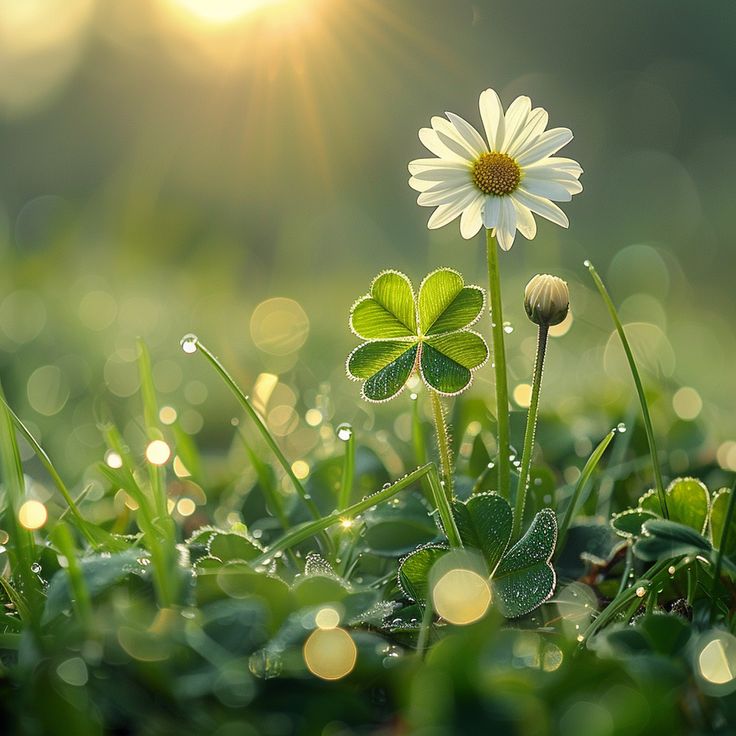
Clover, a humble yet captivating plant, has long been a subject of fascination and folklore. Its vibrant green leaves and distinctive white flowers have inspired artists, photographers, and nature lovers alike. In this article, we delve into the world of clover pictures, exploring their significance, varieties, and how to capture the perfect clover image.
Clover: More Than Just a Weed
Contrary to popular belief, clover is not just an unwanted weed in your lawn. It's a hardy, nitrogen-fixing plant that plays a crucial role in maintaining soil health and promoting biodiversity. Clover's deep root system helps prevent soil erosion, and its ability to fix nitrogen in the soil makes it a valuable crop for organic farming.
Moreover, clovers have been a part of human culture for centuries. The four-leaf clover, in particular, is a symbol of good luck and prosperity in many cultures. It's often used in St. Patrick's Day celebrations and is a popular motif in Irish art and literature.


Varieties of Clover: A World of Green
There are over 300 species of clover, each with its unique characteristics. Here are a few common varieties:
- White Clover (Trifolium repens): The most common type of clover, white clover has small, white flowers and is often found in lawns and pastures.
- Red Clover (Trifolium pratense): Known for its vibrant pinkish-purple flowers, red clover is a popular ornamental plant and is also used in herbal medicine.
- Crimson Clover (Trifolium incarnatum): This variety has deep red flowers and is often used as a cover crop due to its ability to fix large amounts of nitrogen in the soil.
The Four-Leaf Clover: A Rare Treasure
The four-leaf clover is a rare variation of the three-leaf clover, with each leaf believed to represent something: the first is for faith, the second for hope, the third for love, and the fourth for luck. The chances of finding a four-leaf clover are approximately 1 in 10,000, making it a sought-after find among clover enthusiasts.


Capturing the Perfect Clover Image
Whether you're a professional photographer or an amateur with a smartphone, here are some tips to help you capture stunning clover images:
- Get down to the clover's level to capture a unique perspective.
- Use a macro lens or the macro setting on your smartphone to capture intricate details.
- Experiment with different lighting conditions. Overcast days can provide soft, even light, while sunny days can create dramatic shadows.
- Consider the rule of thirds to create a balanced and interesting composition.
Preserving Clover Images: A Digital Guide
Once you've captured your clover images, it's important to preserve and organize them properly. Here's a simple guide to help you:
| File Format | Usage |
|---|---|
| RAW | Ideal for editing and preserving image quality. Use for professional or serious amateur photography. |
| JPEG | Best for web use and sharing. Use the highest quality setting (around 80-90%) to maintain image quality. |
| PNG | Ideal for graphics and logos. Use for editing and preserving transparency. |
Store your images in a cool, dry place and back them up regularly to prevent data loss. Consider using cloud storage services for easy access and added security.


Clover pictures offer a unique way to connect with nature and capture its beauty. Whether you're a seasoned photographer or a beginner, there's always something new to discover in the enchanting world of clovers.




Related Articles

"Discover Enchanting Four-Leaf Clover Pictures"
The enchanting four-leaf clover, a rare and beloved variation of the common three-leaf clover, has long captivated people's imaginations. These emerald green...
"Discover Enchanting Four-Leaf Clover Pictures: Rare & Beautiful"
Unveiling the Enchantment: Four Leaf Clover Pictures Four leaf clovers, with their rare fourth leaf, have long been a symbol of good luck and charm. These...

"Enchanting Four-Leaf Clover Coloring Pages: Free Printables for Kids & Adults"
Embarking on a whimsical journey of creativity and nature, coloring pictures of four-leaf clovers can be a delightful pastime that combines the joy of art with...

"Enchanting Cartoon Four-Leaf Clovers: Unleash the Luck!"
The whimsical union of the classic four-leaf clover and the vibrant world of cartoons gives birth to an enchanting symbol that transcends reality and enters...

"Enchanting Four-Leaf Clover Coloring Pages: Free Printables for Kids & Adults"
Unveiling the Enchantment: Four Leaf Clover Coloring Pictures Embark on a captivating journey into the world of four-leaf clover coloring pictures, where luck...
"Discover Enchanting Four-Leaf Clover Images: Unveil Nature's Rarity"
The four-leaf clover, a rare and enchanting variant of the common three-leaf clover, has long captivated our imagination and inspired countless images. This...